
Inheritance Base
The World Intangible Cultural Heritage Protection & Development Foundation
Make a Donation
Join the Movement
Our Mission
WICHPDF is dedicated to developing the awareness of Intangible culture in the world to protect the vanishing cultural heritage. WICHPDF is committed to developing new forms of expression for better understanding and utilizing traditional cultures in our modern times. We strive to make the holistic approach to health accessible and approachable to all globally, and build a community that views this discipline as a natural way of healthy living.
To achieve this mission, WICHPDF has partnered with the World Wushu Academy and New York College of Health Professions to establish cultural inheritance bases as described below.
Qi Martial Arts Medicine Inheritance Base
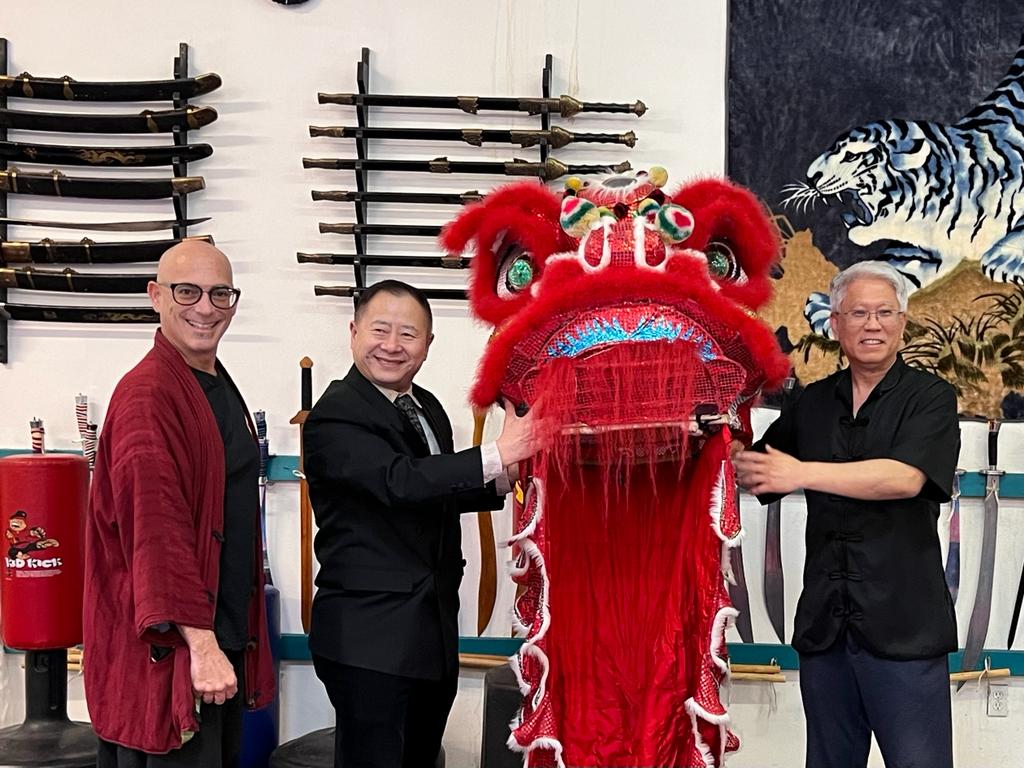
WICHPDF has partnered with World Wushu Academy to promote and inherit martial arts and traditional Chinese medicine and establish the World Intangible Cultural Heritage Protection and Development Foundation in the World Wushu Academy to be referred to as
“Qi Wu Medicine Inheritance Base”.
World Martial Arts Academy was founded in 1984 by Master Jinheng Li to promote and practice “Wushu” as a contemporary Chinese Sport, as well as a way of life to increase health, fitness, and wellness in modern society.
“Our goal is to let our students reach their highest potential in the martial arts. Our instructors are trained from China’s best masters so that we may bring to you the most authentic Wushu possible within a safe environment.”
The 10,000-square-foot World Martial Arts Academy facility is Arizona’s oldest standing Wushu school.
Qigong Acupuncture Inheritance Base
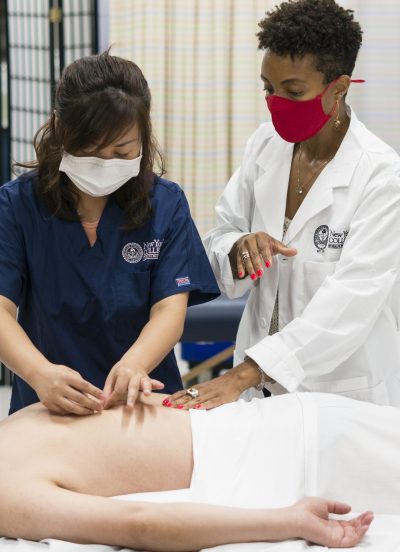
WICHPDF has partnered with the New York School of Medicine Professions to establish strategic cooperation to develop, promote and inherit the culture and technology of traditional Chinese medicine and acupuncture.
New York College of Health Professions was founded by a group of dedicated holistic health care providers more than 40 years ago. It is proud of its status today as a leading institution of holistic health education and care.
The acupuncture program was approved by the New York State Board of Education in 1992, the first such program approved in the state. It was accredited for Bachelor/Master degree status in 1998, along with the oriental medicine program. The acupuncture and herbal medicine programs received programmatic accreditation from the Accreditation Commission of Acupuncture and Herbal Medicine (ACAHM)** in 2014.
Representative Inheritor is China’s system of identifying “Living Human Treasures” as proposed by the United Nations Educational, Scientific and Cultural Organization (UNESCO). As defined by UNESCO, “Living Human Treasures are persons who possess to a very high degree the knowledge and skills required for performing or re‐creating specific elements of the intangible cultural heritage. “Each Member State should choose an appropriate title to designate the bearers of knowledge and skills, the title of “Living Human Treasures” proposed by UNESCO being indicative. Among the systems in existence, there are already a variety of titles: Master of Art (France), Bearer of Popular Craft Tradition (Czech Republic), National Living Treasure (Republic of Korea), Holder of an Important Intangible Cultural Property (Japan and Republic of Korea).”
Our Partners & Sponsors


Give Today

An intangible cultural heritage (ICH) is a practice, representation, expression, knowledge, or skill considered by UNESCO to be part of a place’s cultural heritage. Buildings, historic places, monuments, and artifacts are cultural property. Intangible heritage consists of nonphysical intellectual wealth, such as folklore, customs, beliefs, traditions, knowledge, and language. -Wikipedia
Representative Inheritor is China’s system of identifying “Living Human Treasures” as proposed by the United Nations Educational, Scientific and Cultural Organization (UNESCO). As defined by UNESCO, “Living Human Treasures are persons who possess to a very high degree the knowledge and skills required for performing or re‐creating specific elements of the intangible cultural heritage. “Each Member State should choose an appropriate title to designate the bearers of knowledge and skills, the title of “Living Human Treasures” proposed by UNESCO being indicative. Among the systems in existence, there are already a variety of titles: Master of Art (France), Bearer of Popular Craft Tradition (Czech Republic), National Living Treasure (Republic of Korea), Holder of an Important Intangible Cultural Property (Japan and Republic of Korea).”
Huangdi Neijing (simplified Chinese: 黄帝内经; traditional Chinese: 黃帝內經; pinyin: Huángdì Nèijīng), literally the Inner Canon of the Yellow Emperor or Esoteric Scripture of the Yellow Emperor, is an ancient Chinese medical text or group of texts that has been treated as a fundamental doctrinal source for Chinese medicine for more than two millennia. The work comprises two texts—each of eighty-one chapters or treatises in a question-and-answer format between the mythical Yellow Emperor and six of his equally legendary ministers.
The first text, the Suwen (素問), also known as Basic Questions,[1] covers the theoretical foundation of Chinese Medicine and its diagnostic methods. The second and generally less referred-to text, the Lingshu (靈樞; Spiritual Pivot), discusses acupuncture therapy in great detail. Collectively, these two texts are known as the Neijing or Huangdi Neijing. In practice, however, the title Neijing often refers only to the more influential Suwen. -- https://en.wikipedia.org/wiki/Huangdi_Neijing
Also, see the definition at